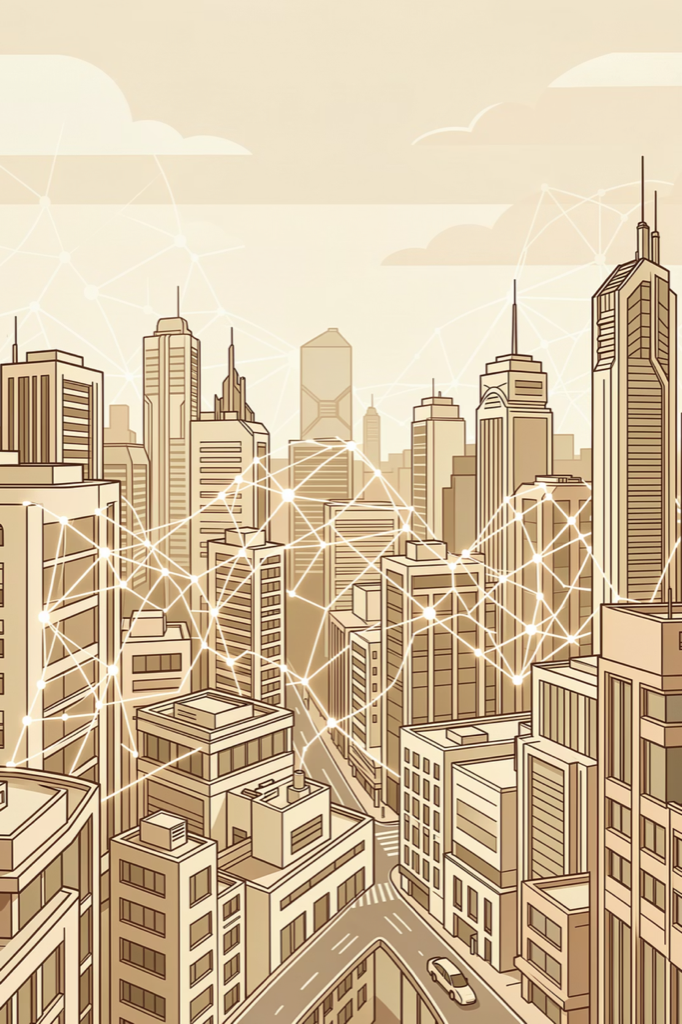
Artificial superintelligence (ASI) is framed as a theoretical ceiling of machine intelligence: unlike today’s artificial narrow intelligence (ANI), it would surpass human cognition across creative, social, and scientific domains. The guide ties ASI to hardware and software trends (neuromorphic chips, multimodal models, evolutionary optimization), sketches routes such as whole-brain emulation and integrated AI ecosystems, and balances transformative benefits in medicine and science against misalignment, economic shock, and weaponization. The closing message is that LLMs and autonomous systems are early steps on a long path, and outcomes depend on alignment, ethics, and international safety chosen today.
Defining ASI versus narrow AI
The piece presents ASI as the point where machines would exceed human capability in essentially every meaningful dimension, not only in specialized tasks. Today’s systems remain ANI: powerful within a scope, but brittle outside it. ASI is often described with the same rhetorical weight as a “last invention”: once superintelligent systems can improve themselves and other technology, the pace of change could leave today’s institutions struggling to keep up.
Core technological architecture
Several research directions are highlighted as part of a stack that could someday support superintelligent behavior:
- Neuromorphic computing: architectures that blend memory and computation more like biological neural tissue, easing some bottlenecks of classical von Neumann designs.
- Multimodal integration: models and systems that jointly interpret text, images, audio, and sensor streams so that perception and reasoning align with a richer picture of the world.
- Evolutionary algorithms: search and optimization processes framed as “digital natural selection,” including ideas where systems refine their own strategies or code with limited direct human rewriting.
- Neural network evolution: faster artificial neurons and networks operating at timescales far beyond biology, which could compound capability if paired with scalable hardware.
Pathways to superintelligence
The guide groups speculative routes into three families:
- Whole brain emulation: high-fidelity computational models of human brains, which could run faster or be copied, if scanning and simulation ever become feasible at scale.
- Brain–computer integration: tight coupling between people and machines (including interface research popularized in public discourse) to merge biological and artificial intelligence.
- Integrated AI ecosystems: networks of specialized agents and services whose combined behavior might exhibit emergent general capability beyond any single component.
Potential global impact
Upside examples include accelerated drug discovery, surgical assistance, breakthroughs in fundamental science, and large-scale optimization for climate and resources. Downside themes include loss of meaningful human control if goals drift, severe labor-market and institutional disruption if capability concentrates quickly, and military applications of systems that are difficult to monitor or bound.
Conclusion
The article treats contemporary LLMs and autonomy as part of the runway toward ASI, not the destination. It stresses that whether the trajectory looks like broad prosperity or acute risk hinges on decisions now about alignment with human values, governance, and cooperation across borders and sectors.
Interactive: slide deck
Week 3 includes a PowerPoint deck aligned to this summary (visual narrative, diagrams, and speaker-ready structure). Download and open in Microsoft PowerPoint, Apple Keynote, or Google Slides after upload to use transitions and notes.
Download Week 3 deck (.pptx) Large file (~27 MB)